Kāwhia beach access - what's going on?

Share Kāwhia beach access - what's going on? on Facebook Share Kāwhia beach access - what's going on? on Twitter Share Kāwhia beach access - what's going on? on Linkedin Email Kāwhia beach access - what's going on? link
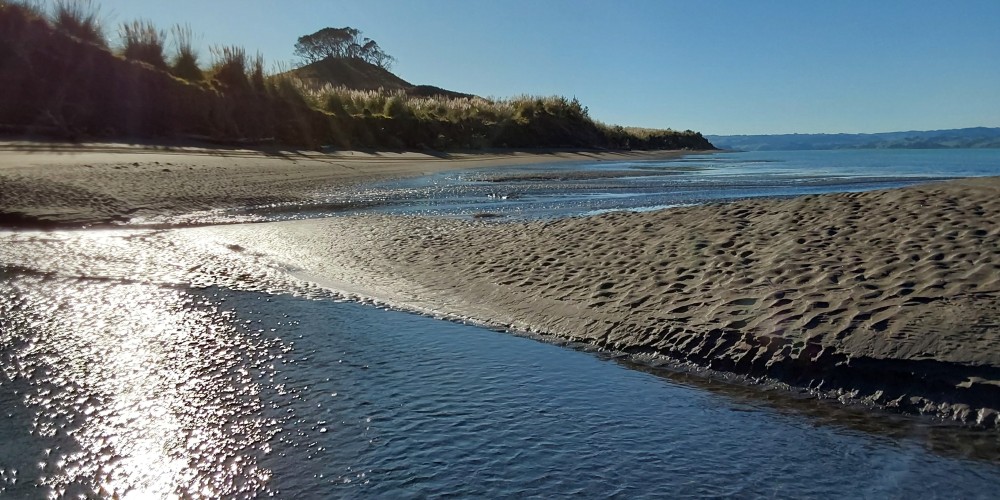

Access to Kāwhia beach via the Karewa boat ramp has been an ongoing issue for many years (and to a lesser extent, beach access via Aotea). This page summarises the issue and what Council is doing.

Quick links - Alternate Access Feasibility documents

So, what’s the issue?

There are several issues at play. Vehicles on beaches provide recreational access, which comes with pros and cons.

As long as drivers abide by good practices, having access to the beach can provide many recreational and wellbeing benefits. However, we are seeing an increase in some bad behaviour and poor judgements leading to:

  • damage to sensitive environments
  • “hooning” on the beach
  • vehicles being taken on the beach that are not designed for that use
  • vehicles getting stuck

There are often varying views as to whether the damage is from locals or visitors. Regardless of where the driver or vehicle is from, it is the poor decisions and bad behaviour of individuals which is causing the problems.

This issue is not unique to Kāwhia, and often plays out at vehicle-access beaches around Aotearoa with strongly divided communities (for and against).

What are the rules?

The Kāwhia/Aotea coastal foreshore is a highly complex area to manage, involving multiple agencies, multiple overlapping legislation and land ownership.

Ōtorohanga District Council - Road Controlling Authority

  • All beaches are classified as unformed and unsurveyed legal roads under the Land Transport Act, unless restricted by local bylaws.
  • ŌDC restricts vehicle access on the Kāwhia beach under our Traffic Management Bylaw.
  • Traffic is limited to 20kph under Council’s bylaw (default is 100kph).
  • The “beach” (the area below high tide) is classified as a legal road in the Land Transport Act.
  • Normal road rules apply.
  • Importantly, ŌDC does not have any powers to enforce breaches of the bylaw.
  • As a legal road, NZ Police have the powers and responsibility for enforcing breaches of speed or driver behaviour.
  • Any observations of unsafe driving or breaches of the 20kph limit should be reported directly to NZ Police.

Waikato Regional Council - Environmental Management

  • WRC manages adverse effects on the environment.
  • Below high tide, the Waikato Regional Coastal Plan applies.
  • Above high tide, the Waikato Regional Plan applies.
  • Areas covered by WRC include:
    • Damage to sensitive ecological or heritage areas
    • Discharges (e.g. oils and fluids from stuck vehicles)
    • All structures on the foreshore
  • Any observations of environmental damage should be reported directly to WRC.

Landowners

  • The boundary for Māori freehold land ends at the “mean high water spring mark” (MHWS – the high tide mark). Private access rights apply to Māori freehold land above the mean high tide mark, but not below MHWS as this falls within the “common marine and coastal area”.

Coast Care Groups

  • Community-led voluntary organisations enhancing coastal ecology.
  • No statutory powers, but play an important role through volunteer work.

Note: Terms like the “Queen's Chain” or “King's Chain” are obsolete. These were replaced in 1991 by esplanade provisions under the RMA and coastal public access under the Marine and Coastal Areas Act. There is no legal “King's Chain.”

What is being done?

Following a well-attended public meeting on beach access held at Kāwhia on 13th February 2025, the Kāwhia Community Board endorsed a 3-stage approach:

Stage 1: Signage: Completed

  • Install better informational signs to inform drivers of the risks of getting stuck.
  • Signs installed.

Stage 2: Alternate Access Feasibility: Completed

  • Investigate the feasibility of alternate access through Tainui Kāwhia Incorporated (TKI) forestry land, from Tom French Reserve (offered by TKI).
  • Consultant feasibility report received August 2025.
  • ŌDC is working with TKI and key stakeholders on options.
  • Click on the relevant link to find a copy of the of the report, design and costings.

Stage 3: Review Traffic Management Bylaw: Under consideration

  • Review the bylaw if appropriate, depending on feasibility options and outcomes.
  • Awaiting options discussions with key stakeholders.
  • If alternative access is confirmed (and all consents obtained), and the bylaw is amended, ŌDC must follow a full public consultation process open to all.

For more information

As this is such a complex area, it cuts across several of Council’s core functions. For any queries, please contact Council through the usual way, and we will allocate to the right person for follow up.


Access to Kāwhia beach via the Karewa boat ramp has been an ongoing issue for many years (and to a lesser extent, beach access via Aotea). This page summarises the issue and what Council is doing.

Quick links - Alternate Access Feasibility documents

So, what’s the issue?

There are several issues at play. Vehicles on beaches provide recreational access, which comes with pros and cons.

As long as drivers abide by good practices, having access to the beach can provide many recreational and wellbeing benefits. However, we are seeing an increase in some bad behaviour and poor judgements leading to:

  • damage to sensitive environments
  • “hooning” on the beach
  • vehicles being taken on the beach that are not designed for that use
  • vehicles getting stuck

There are often varying views as to whether the damage is from locals or visitors. Regardless of where the driver or vehicle is from, it is the poor decisions and bad behaviour of individuals which is causing the problems.

This issue is not unique to Kāwhia, and often plays out at vehicle-access beaches around Aotearoa with strongly divided communities (for and against).

What are the rules?

The Kāwhia/Aotea coastal foreshore is a highly complex area to manage, involving multiple agencies, multiple overlapping legislation and land ownership.

Ōtorohanga District Council - Road Controlling Authority

  • All beaches are classified as unformed and unsurveyed legal roads under the Land Transport Act, unless restricted by local bylaws.
  • ŌDC restricts vehicle access on the Kāwhia beach under our Traffic Management Bylaw.
  • Traffic is limited to 20kph under Council’s bylaw (default is 100kph).
  • The “beach” (the area below high tide) is classified as a legal road in the Land Transport Act.
  • Normal road rules apply.
  • Importantly, ŌDC does not have any powers to enforce breaches of the bylaw.
  • As a legal road, NZ Police have the powers and responsibility for enforcing breaches of speed or driver behaviour.
  • Any observations of unsafe driving or breaches of the 20kph limit should be reported directly to NZ Police.

Waikato Regional Council - Environmental Management

  • WRC manages adverse effects on the environment.
  • Below high tide, the Waikato Regional Coastal Plan applies.
  • Above high tide, the Waikato Regional Plan applies.
  • Areas covered by WRC include:
    • Damage to sensitive ecological or heritage areas
    • Discharges (e.g. oils and fluids from stuck vehicles)
    • All structures on the foreshore
  • Any observations of environmental damage should be reported directly to WRC.

Landowners

  • The boundary for Māori freehold land ends at the “mean high water spring mark” (MHWS – the high tide mark). Private access rights apply to Māori freehold land above the mean high tide mark, but not below MHWS as this falls within the “common marine and coastal area”.

Coast Care Groups

  • Community-led voluntary organisations enhancing coastal ecology.
  • No statutory powers, but play an important role through volunteer work.

Note: Terms like the “Queen's Chain” or “King's Chain” are obsolete. These were replaced in 1991 by esplanade provisions under the RMA and coastal public access under the Marine and Coastal Areas Act. There is no legal “King's Chain.”

What is being done?

Following a well-attended public meeting on beach access held at Kāwhia on 13th February 2025, the Kāwhia Community Board endorsed a 3-stage approach:

Stage 1: Signage: Completed

  • Install better informational signs to inform drivers of the risks of getting stuck.
  • Signs installed.

Stage 2: Alternate Access Feasibility: Completed

  • Investigate the feasibility of alternate access through Tainui Kāwhia Incorporated (TKI) forestry land, from Tom French Reserve (offered by TKI).
  • Consultant feasibility report received August 2025.
  • ŌDC is working with TKI and key stakeholders on options.
  • Click on the relevant link to find a copy of the of the report, design and costings.

Stage 3: Review Traffic Management Bylaw: Under consideration

  • Review the bylaw if appropriate, depending on feasibility options and outcomes.
  • Awaiting options discussions with key stakeholders.
  • If alternative access is confirmed (and all consents obtained), and the bylaw is amended, ŌDC must follow a full public consultation process open to all.

For more information

As this is such a complex area, it cuts across several of Council’s core functions. For any queries, please contact Council through the usual way, and we will allocate to the right person for follow up.

Page last updated: 01 May 2026, 12:49 PM